Our story
Why I Made The Honorable Path
My son has always loved it when I read to him. Snuggled up with a good story, he'd hang on every word. But when it was his turn to read, everything changed. He didn't want to, and getting him to try felt like pushing a wagon uphill.
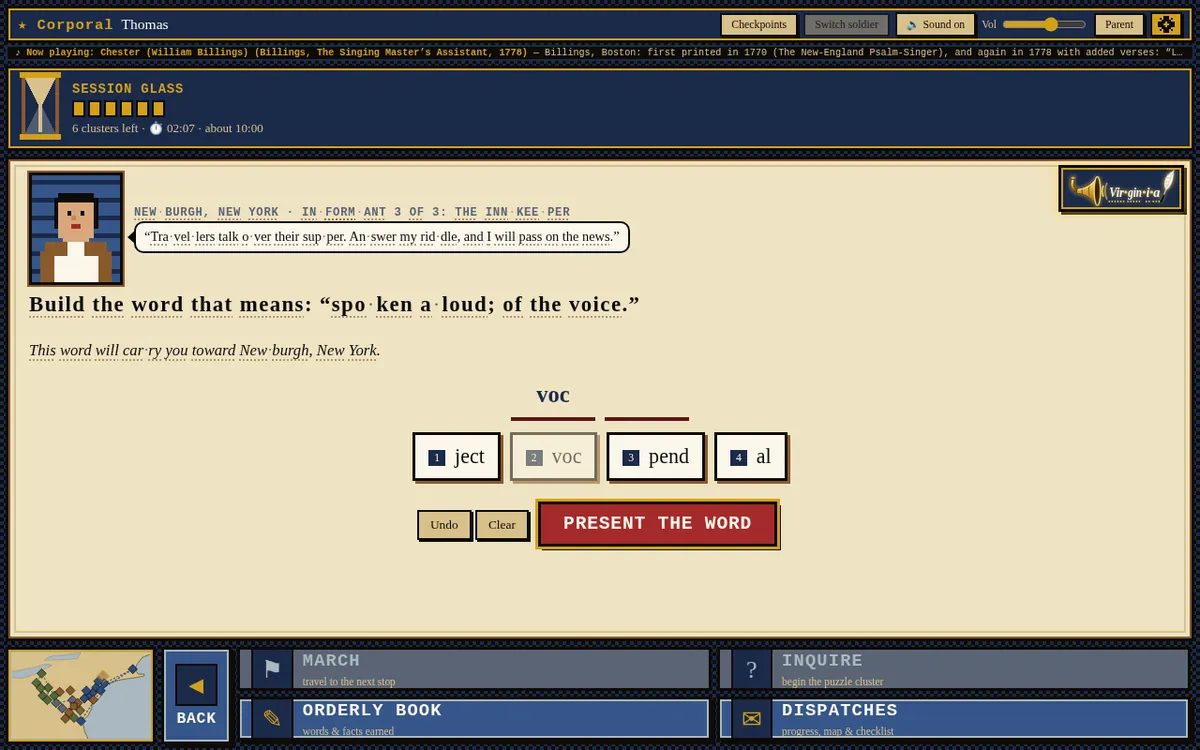
So I tried something different. I built him a game: a text adventure where the only way forward was to read. Almost overnight, he was excited about reading. The words weren't a chore anymore. They were the path to the next adventure.
Then it hit me. If a game could make him want to read, it could do much more. I could build in the vocabulary I wanted him to learn. I could have him memorize the documents that shaped our founders. And really, I could gamify almost anything I wanted him to learn.
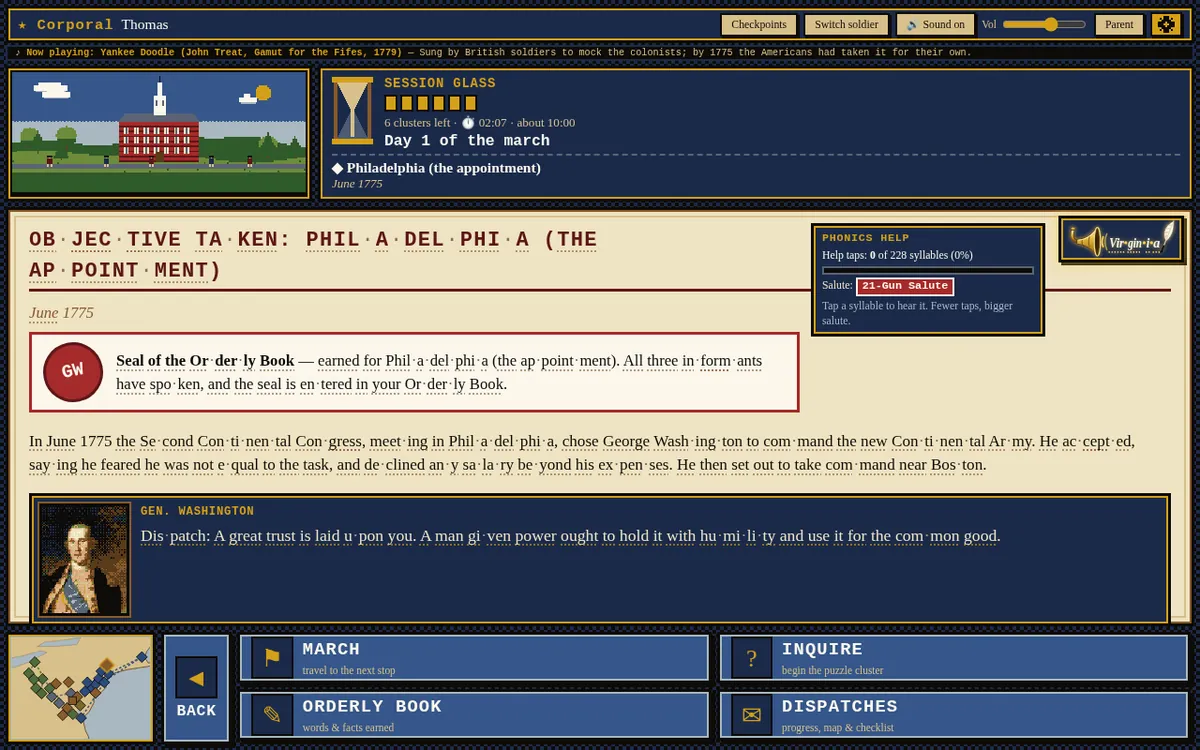
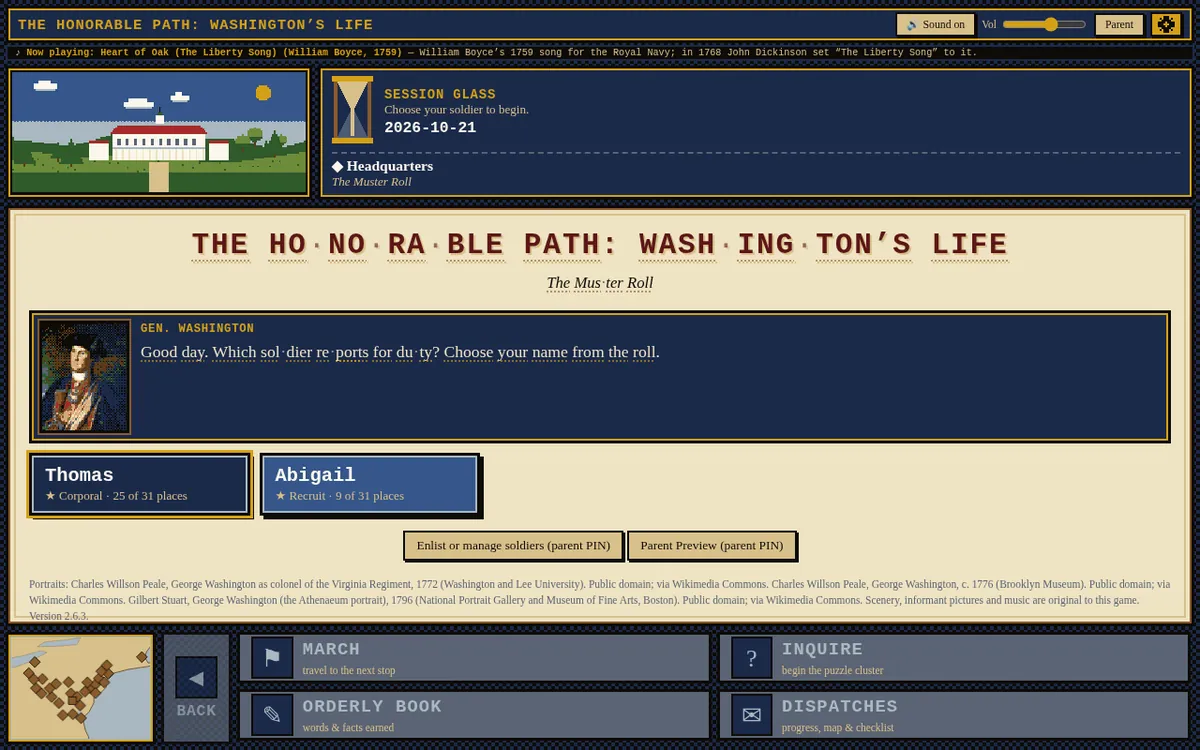
I've never liked teaching reading by sight alone. Kids deserve to know how words work. So I built a syllable mode. When a child taps a word, the game breaks it apart and sounds it out one syllable at a time in a cheerful 8-bit voice, then says the whole word. Seeing the word split up while hearing it split up makes it click fast. My son loves it, and he earns bonuses for reading without help, all the way up to a 21-gun salute.
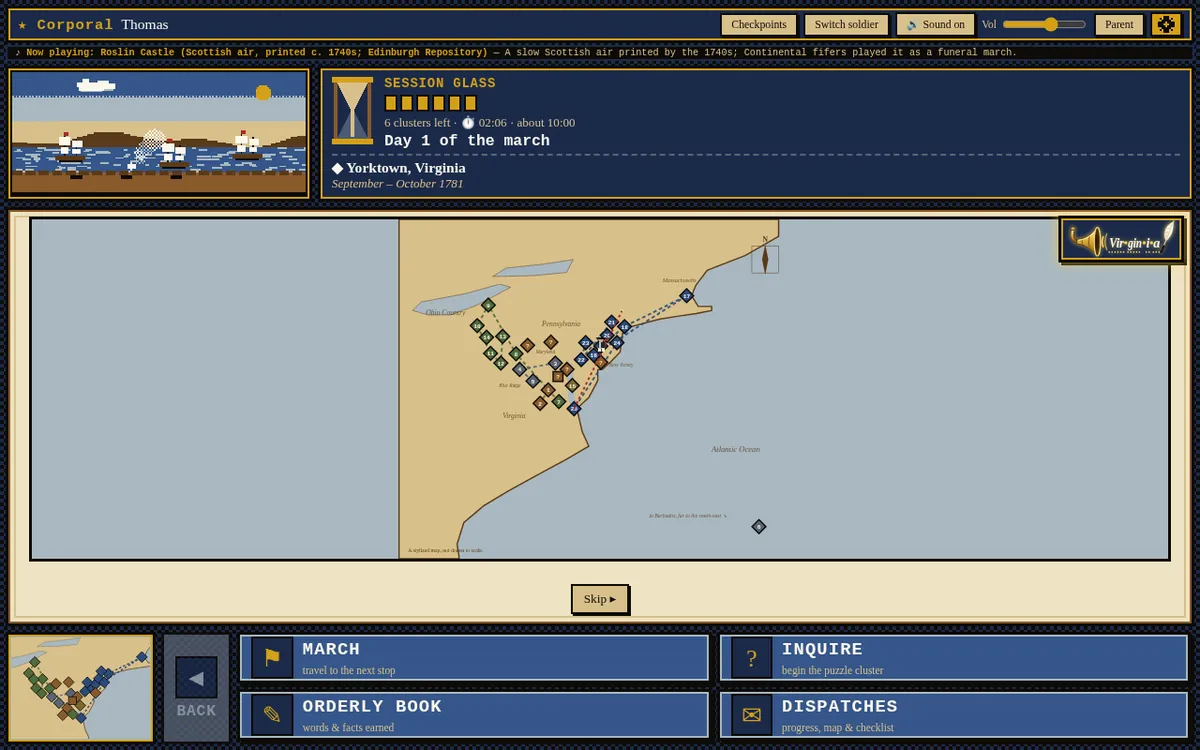
Underneath it all, I wanted to pass on something bigger: the history and values of our country's founding. As a boy, George Washington copied out the Rules of Civility by hand, and he spent the rest of his life trying to live by them. Following him from that copybook through surveying, a voyage to Barbados, the French and Indian War and the Revolution shows kids what duty, honor and civility look like in a real life.
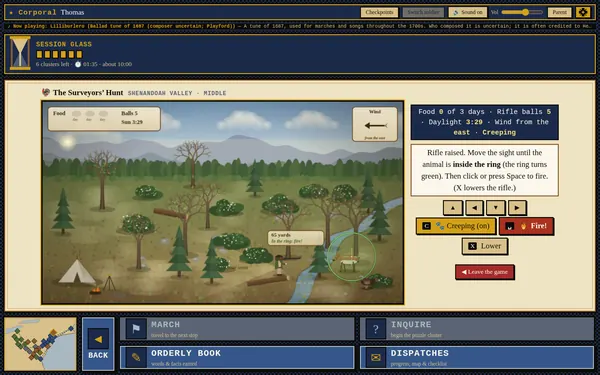
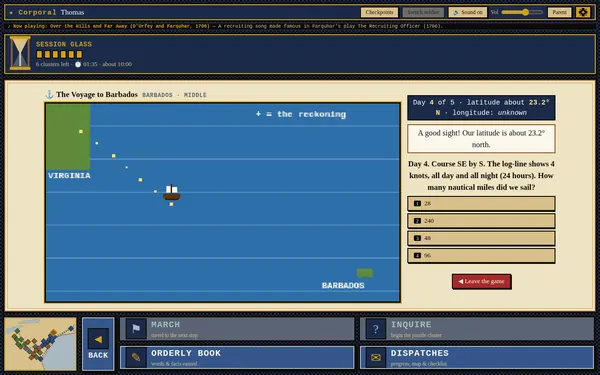
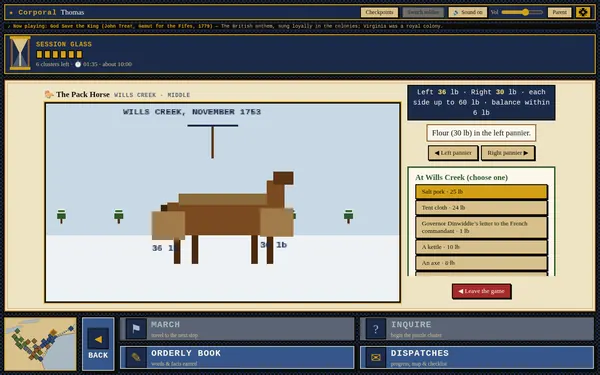
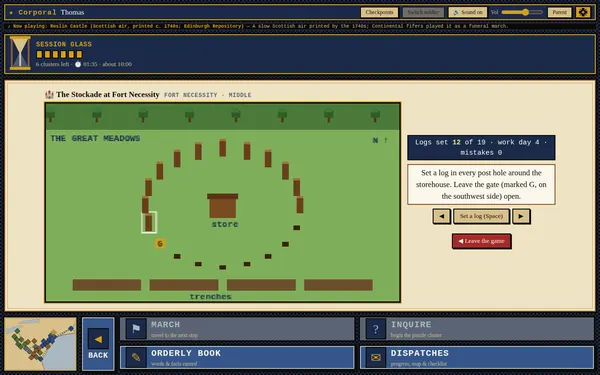
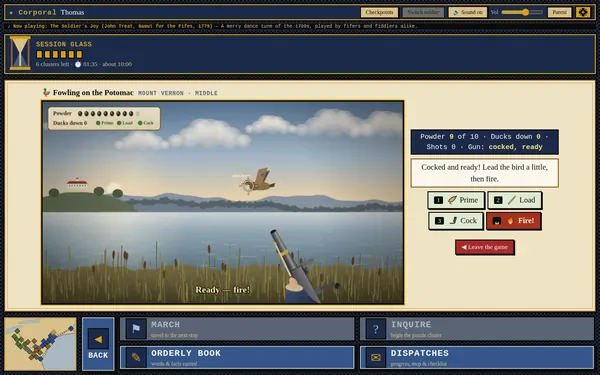
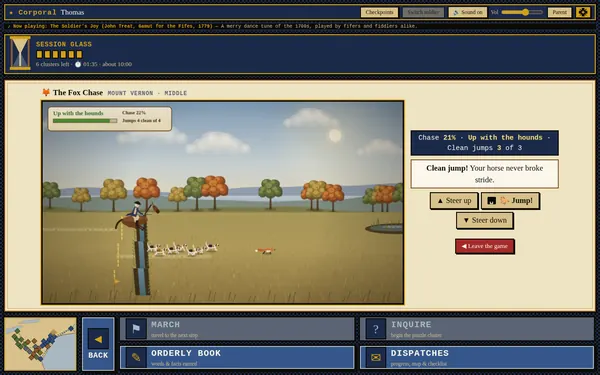
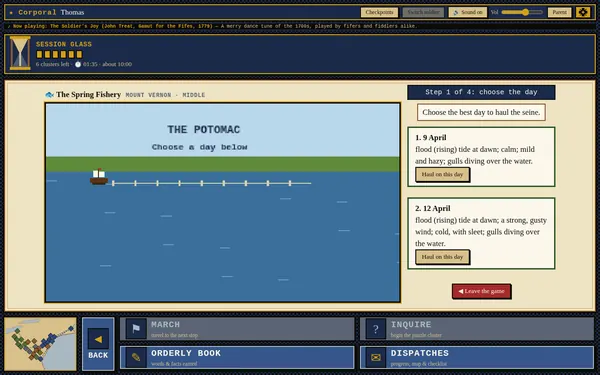
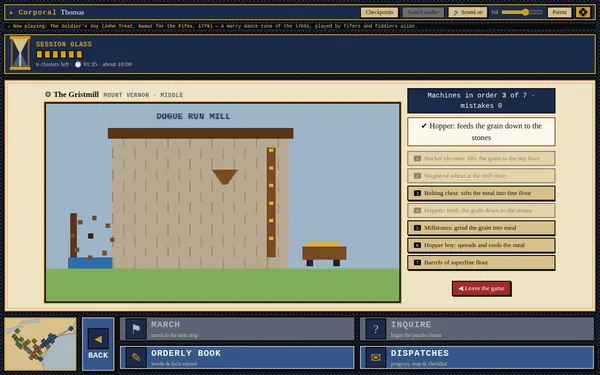
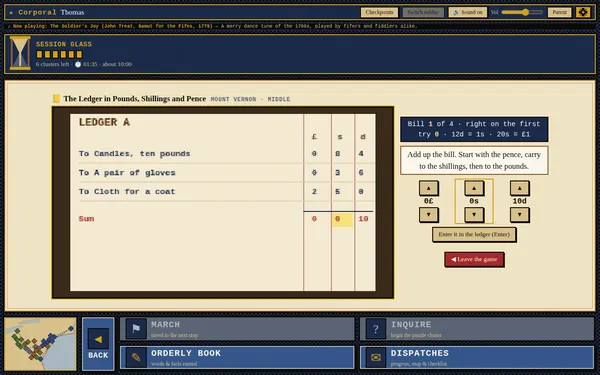
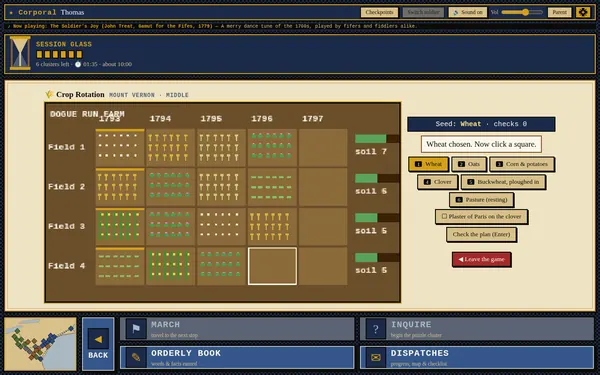
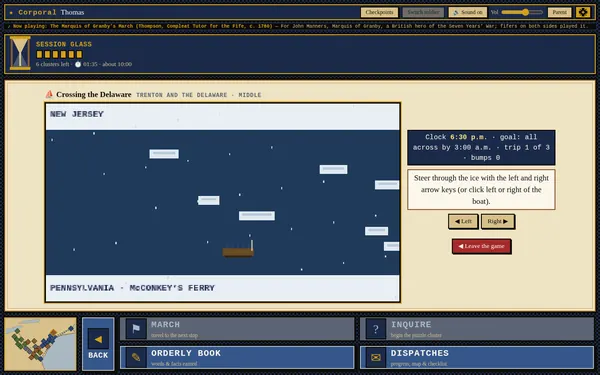
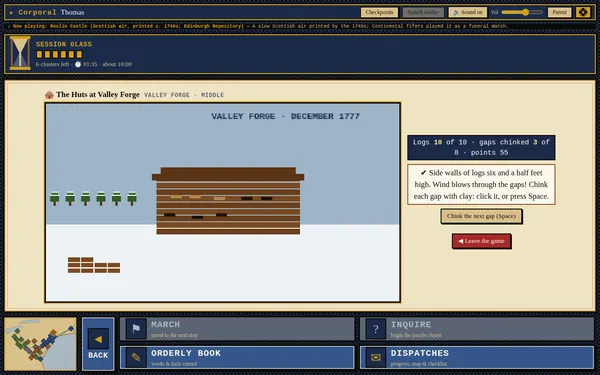
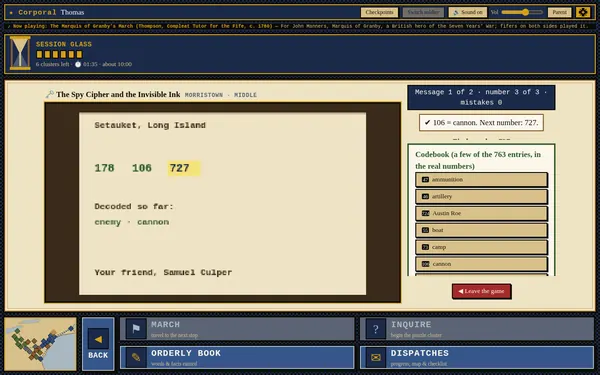
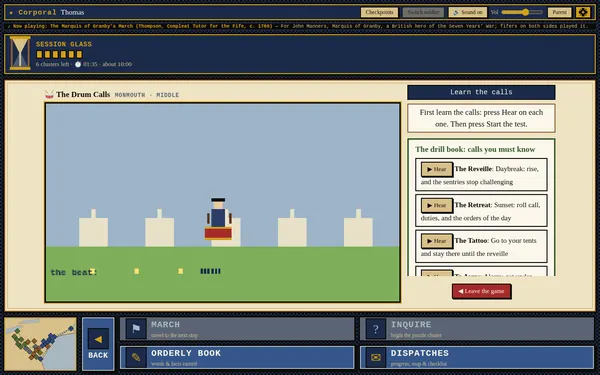
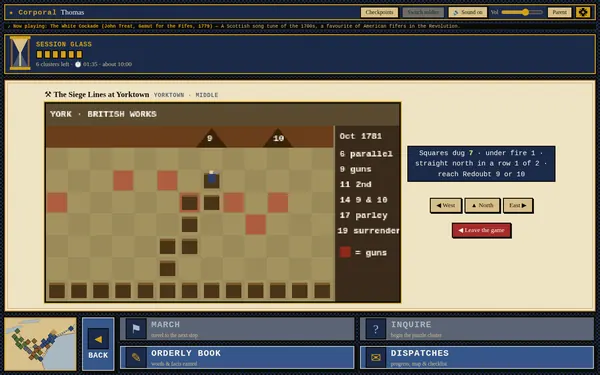
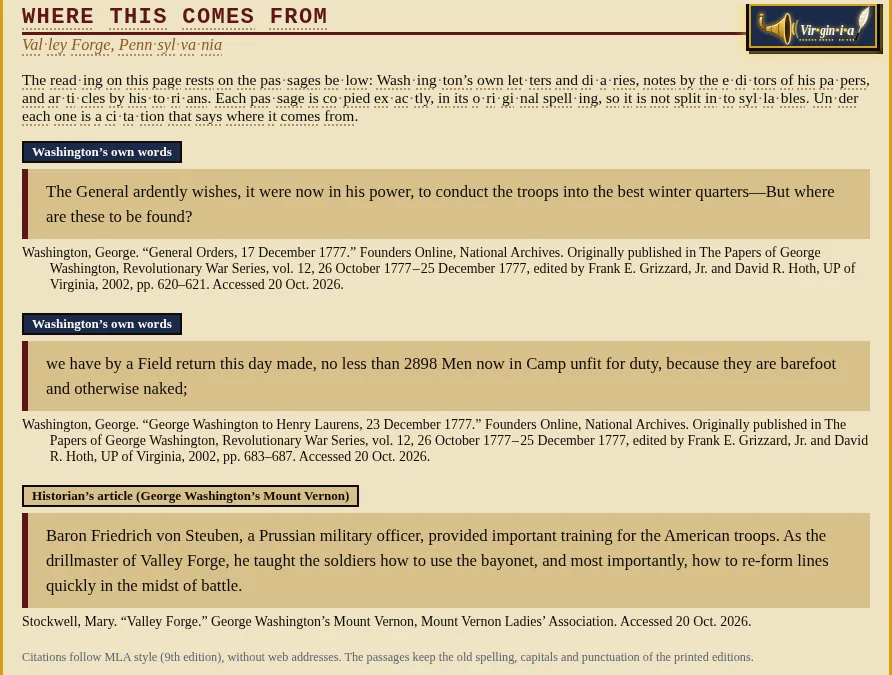
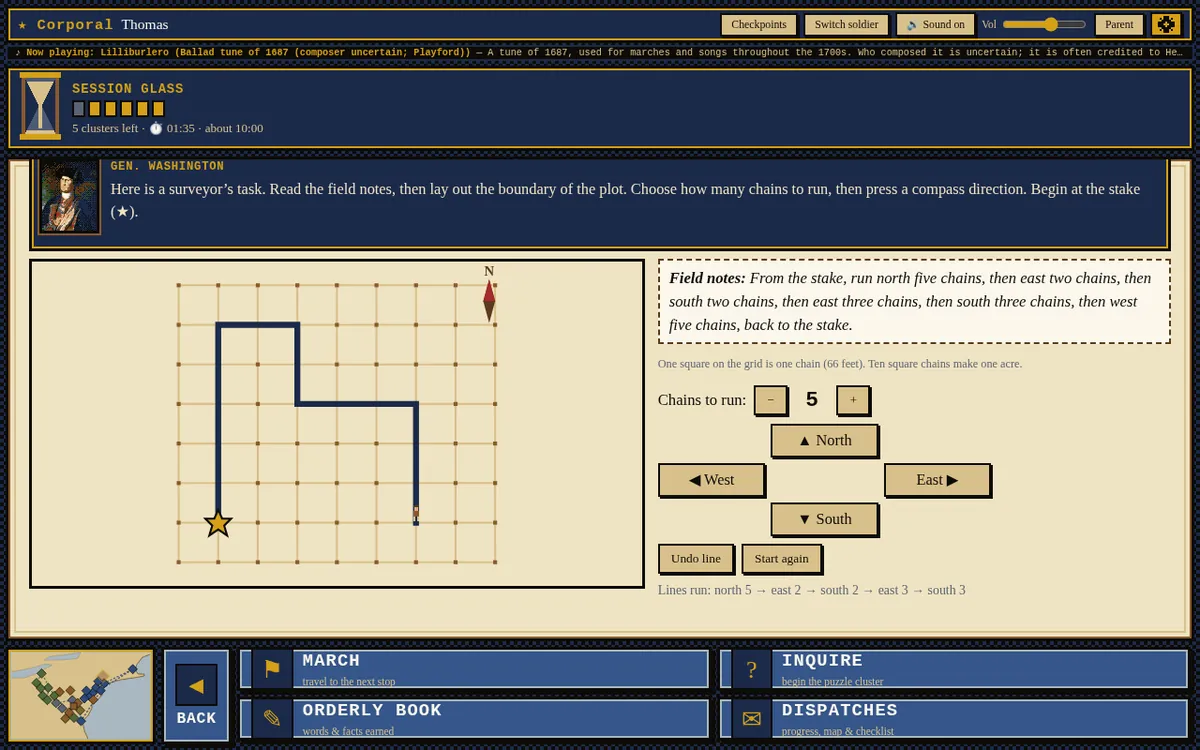
Along the way they learn the Latin and Greek roots behind hundreds of English words. They read Washington's own journals and letters, with real citations. They work through math and science in 15 mini-games set in his world, from sailing by dead reckoning to rotating crops to cracking a spy cipher. And they hear 27 real fife tunes from the 1700s while they play.
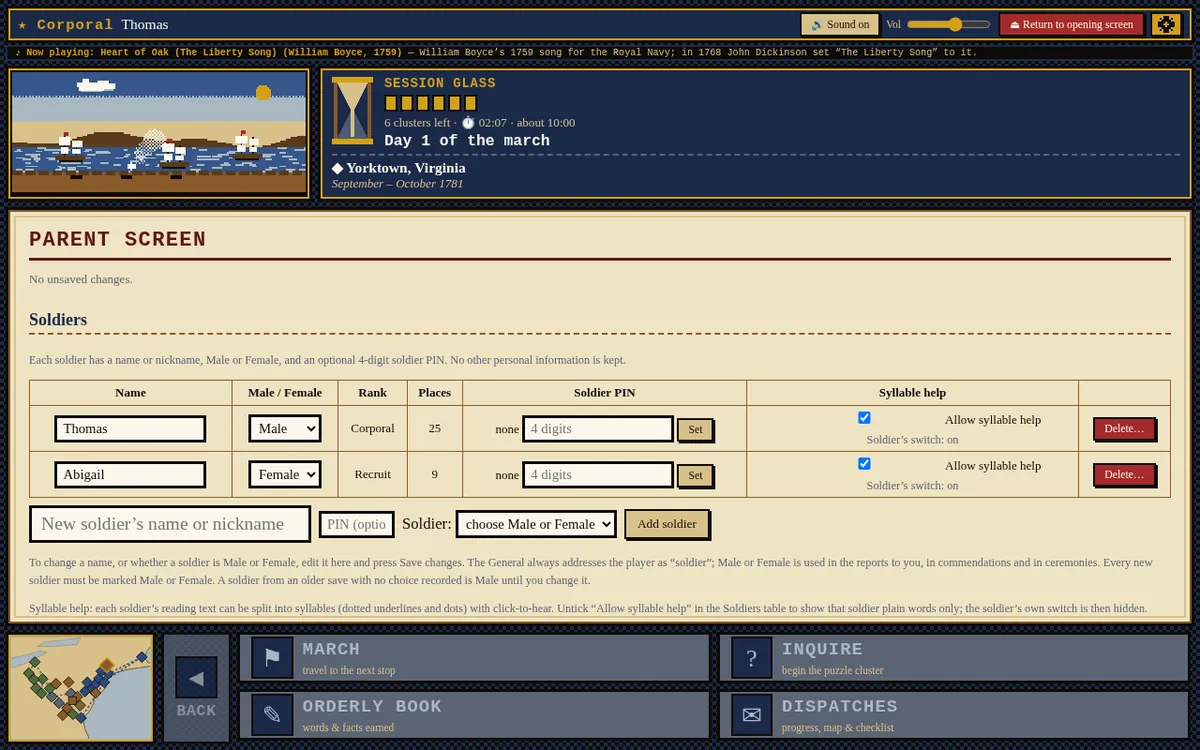
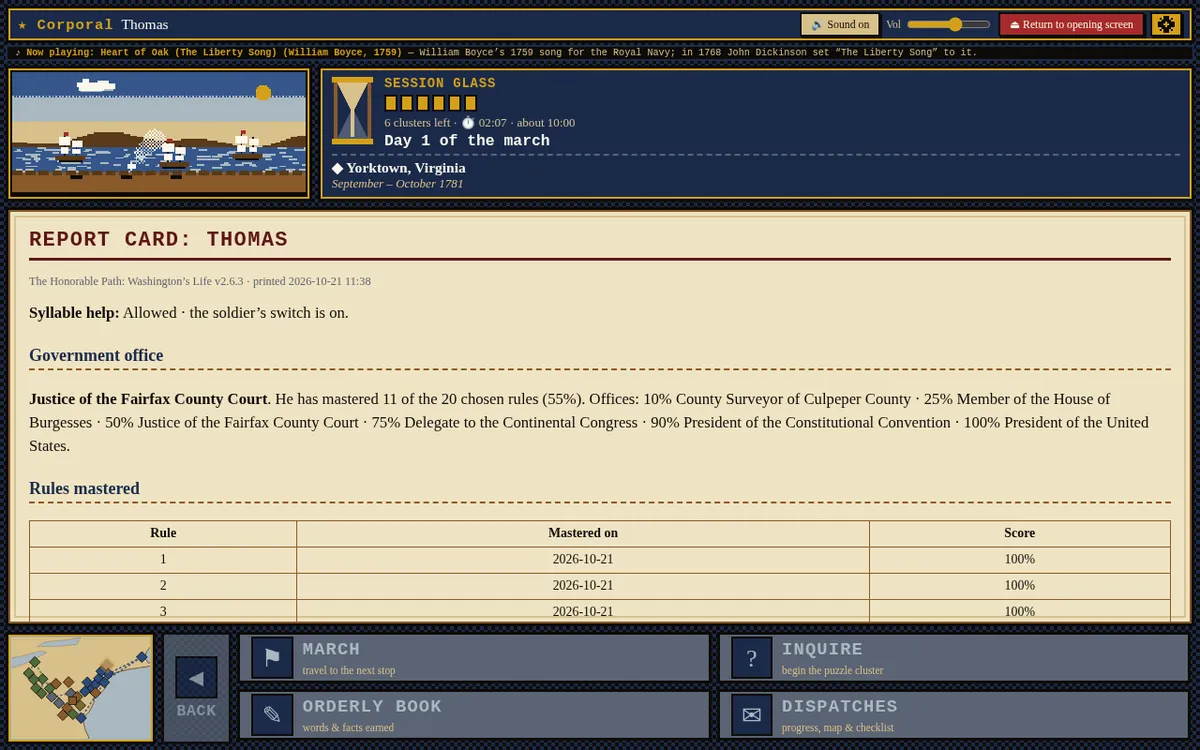
It's made for kids 6 to 12. The younger ones will have to stretch, and that's the point. With a parent beside them and syllable help switched on, they grow into it. Parents get separate profiles for each child, printable report cards and control over how much help each child gets.
It runs offline, with no ads, no accounts and no data collected. It's just a father's attempt to give his son a love of reading, a love of learning and an honorable path to follow. I hope it does the same for your family.
— Matthew Nowlin